Made

Medical Assistive Design & Engineering Lab
Made

The MADE research lab at HIT is an academic makerspace where researchers and students pioneer novel medical, assistive, and rehabilitative devices to address unmet clinical requirements. Projects at MADE respond to real-life clinical needs, with each challenge defined in close collaboration with clinicians, and solutions tested in clinical trials, ultimately generating medical, assistive, and rehabilitative innovations to drive social change. 

MADE is equipped with state-of-the-art tools (3D printers, sensors, microcontrollers, laser cutters, actuators, and more) and applies Design Thinking methodology. The lab serves as a platform for multidisciplinary cooperation between various Faculties and Departments at HIT (e.g. the Faculty of Engineering, Faculty of Design, Dept. of Digital Medical Technologies, Depts. Of Computer Science and Data Science, etc.), as well as collaborations with leading medical and rehabilitation centers, schools of special education, social entrepreneurs, municipalities, and other institutions. 

Activities at MADE include both R&D conducted by researchers and educational projects.

Below is a sample of innovative tools and technologies developed by HIT researchers at the MADE Lab:


STREAMfor Essential Tremor Disorder

Partner: Movement Disorders Institute, Dept. of Neurology, Sheba Medical Center


STREAM is a remote tremor monitoring kit for people with essential tremor disorder – a neurological condition causing involuntary rhythmic shaking, mostly of the hands. Although controlled largely by medication, the disorder requires regular assessments, which essentially rely on patients’ subjective reports, and reflect their condition at a specific point in time – in the doctor’s office.


To enable more reliable, constant monitoring of hand tremors, the MADE team developed an innovative kit consisting of a toothbrush, cup, and fork or spoon, equipped with sensors and specially designed for easy use. Data collected by the sensors during use is processed with Digital Signal Processing (DSP) and Machine Learning technologies and the visualized results are sent to the clinician for continual quantitative assessment of the patient’s condition. The STREAM system is currently undergoing clinical trials at the Sheba Medical Center.

MODAM Multi-modal Dysphagia Management

Partner: Rabin Medical Center

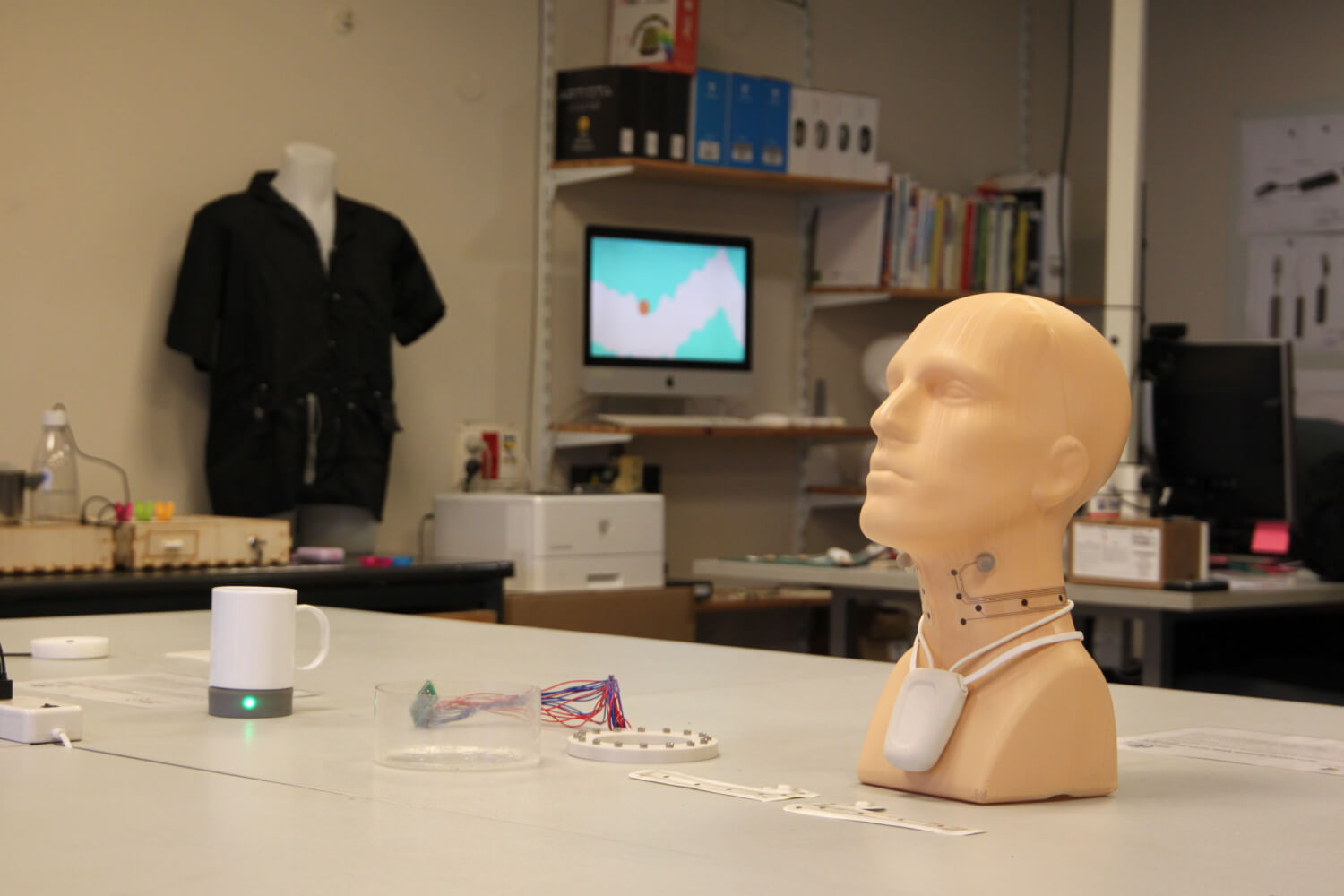
MODAM is a wearable noninvasive monitoring system worn around the neck, designed specifically for people with swallowing disorder (dysphagia). Using several sensors to monitor and measure the activity of swallowing muscles in real time, the system provides clinicians with objective data for accurately assessing their patients’ condition and progress. Moreover, MODAM empowers patients through user-friendly biofeedback, to improve training and enhance patient compliance.

Assessment toolkit – for inflammatory rheumatic diseases

Partner: Rheumatology Dept., Tel Aviv (Ichilov) Medical Center

This unique toolkit was designed to accurately and objectively evaluate the hand functions of patients with inflammatory rheumatic diseases, replacing the subjective questionnaires currently in use. The kit consists of various objects equipped with sensors, measuring how long it takes the patient to execute several daily functions: buttoning and zipping a shirt, inserting coins into a cash box, and opening a jar. Connected to a wireless app, the system records data and produces graphs over time – enabling clinicians to follow the patient’s progress or detect deterioration.

Following is a list of smart objects developed by HIT students at the MADE Lab for people with various disabilities:

  • Patients after stroke: gamification to boost patient compliance and effectiveness of physiotherapy exercises for rehabilitation. (Partner: Beit Loewenstein Rehabilitation Hospital)
  • Children with ASD (Autism Spectrum Disorder): musical instruments and interactive video games to encourage joint activities and communication with others. (Partner: Niv Elementary School, Holon)

Children with CP: specially adapted musical instruments (Partner: Herzfeld Special Education School)

For more information please contact:

Yael Avni, +972-50-3996299, yaela@hit.ac.il